
12-Hour Shifts and Double Overtime Pay: Boon for Earnings or Burnout Trap in Startups?
You stare at your laptop at 10 PM on a Tuesday, pushing code for a product launch that feels endless. Moreover, your founder messages the team Slack: “We need all hands on deck this week.” Furthermore, in India’s startup world, such long hours have long been the norm, often without extra pay. Additionally, everything changes now because the new labour codes, effective from November 21, 2025, bring strict rules on working hours and overtime. However, many employees wonder if these changes truly protect them or simply create a burnout trap disguised as more money—especially in high-pressure startups.
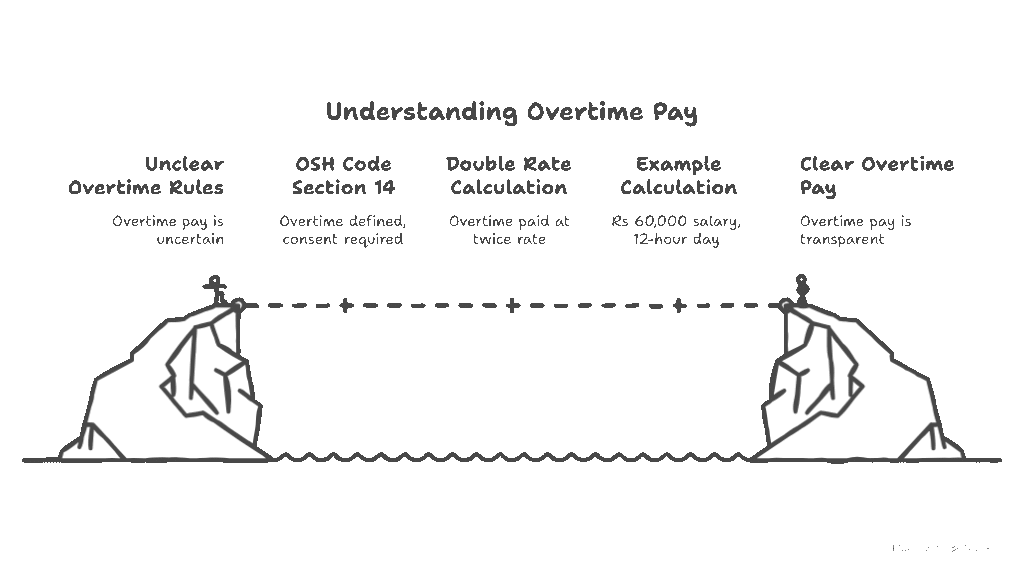
The Occupational Safety, Health and Working Conditions (OSH) Code, 2020, consolidates 13 old laws into one modern framework. Moreover, it caps normal working hours at eight hours a day and 48 hours a week. Furthermore, it allows total daily hours up to 12, including rest intervals. Additionally, any time beyond normal hours counts as overtime and pays double the ordinary wage rate. Most importantly, overtime requires your explicit consent—you cannot be forced.
You gain the power to earn significantly more if you choose extra hours. However, startups often blur lines between passion and exploitation. Therefore, this blog explains the exact legal provisions in simple English, shows real calculations, and focuses on what happens in startups—where employees frequently feel they have little real power to say no.
First, What Exactly Do the New Rules Say About Daily Hours and Spreadover?
The OSH Code under Section 13 fixes normal working hours at no more than eight hours in a day. Moreover, the weekly limit stays at 48 hours. Furthermore, the total spreadover—the time from starting work until ending, including breaks—can extend to 12 hours in a day. Additionally, this setup enables flexible models like a four-day workweek with 12-hour shifts, as long as the weekly cap holds.
In simple English, you work a standard eight-hour day most times. However, your employer schedules up to 12-hour days if needed, and the extra four hours become overtime at double pay. Furthermore, states fix exact rest intervals, but generally, you get at least 30 minutes after every five hours. Additionally, no one works more than six days straight without a full day off.
Next, How Does Overtime Work and How Much Extra Will You Earn?
Section 14 of the OSH Code states clearly that overtime happens when you exceed normal hours. Moreover, employers pay it at twice your ordinary rate of wages. Furthermore, the Code limits overtime to 125 hours in a three-month quarter in most cases. Additionally, most crucially, Section 14 requires your prior consent in writing or electronically—no overtime without agreement.
For example, suppose your monthly salary is Rs 60,000, and you work on a five-day week. Your daily wage calculates as Rs 60,000 divided by 26 working days, which equals about Rs 2,308. Furthermore, your hourly rate becomes Rs 2,308 divided by eight hours, roughly Rs 288. Additionally, if you work a 12-hour day, the extra four hours earn you 4 times 2 times Rs 288, which totals Rs 2,304 extra for that day—almost a full day’s pay on top.
Over a month with five such long days, you pocket around Rs 11,500 more. Moreover, for someone earning Rs 1 lakh monthly, one 12-hour day adds about Rs 3,846 in overtime. Furthermore, this double rate applies universally, even to IT and software employees who rarely got it before.
Additionally, Why Do Many Call This a Potential Burnout Trap?
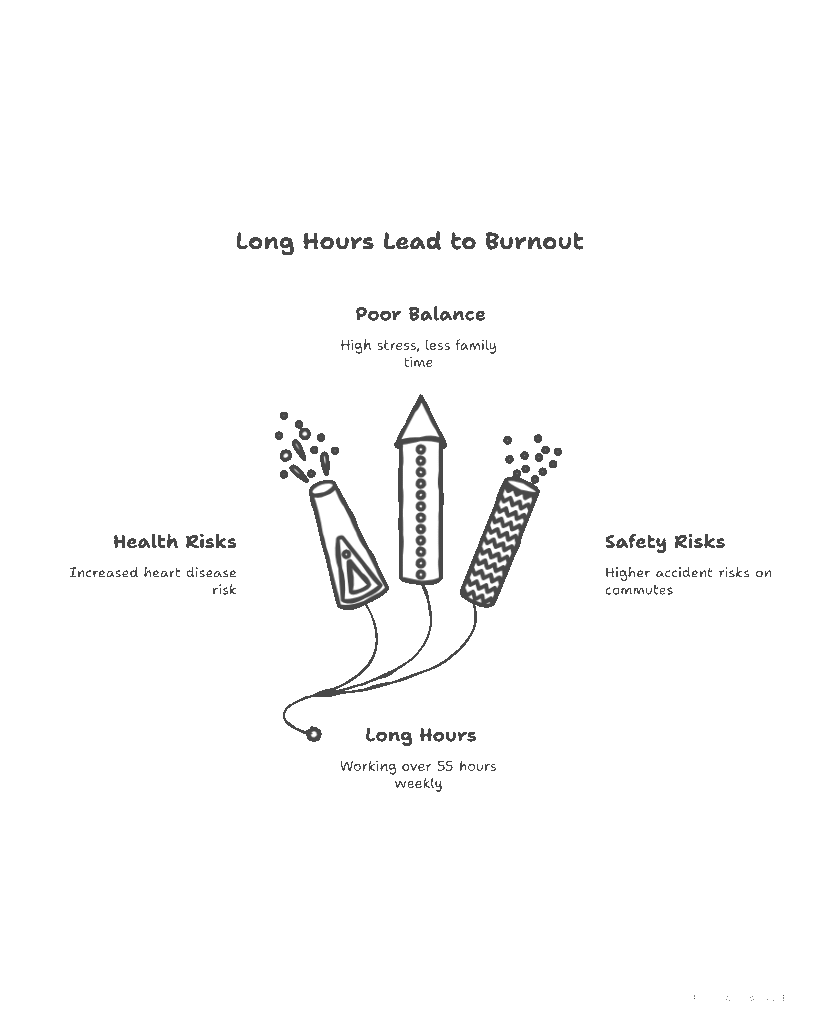
Additionally, why do many call this a potential burnout trap? Prolonged working hours take a serious toll on both physical and mental health. Studies indicate that working more than 55 hours a week increases the risk of heart disease by nearly 35 percent, along with higher chances of anxiety, depression, and chronic fatigue. In India’s startup ecosystem, employees already report intense pressure, tight deadlines, and limited work–life balance, making extended shifts even more taxing.
Moreover, 12-hour workdays leave little time for family, rest, or personal well-being. Persistent fatigue can lower productivity, increase workplace errors, and raise the risk of road accidents during long daily commutes. Over time, this exhaustion may lead to disengagement and high attrition rates.
Furthermore, while the labour Code mandates safeguards such as free annual health checkups for workers above 45 years of age and safety committees in larger establishments, enforcement often remains weak in fast-paced startup environments. Although employee consent is required for overtime, many workers worry that refusing extended hours could negatively affect promotions, performance evaluations, or even job security—turning a supposed benefit into a subtle form of compulsion.
So, What Changes Specifically for Startups—and Do Employees Really Have Power?
Startups under 50 employees often escape some old rules, but the new OSH Code applies to almost all establishments. Moreover, no blanket exemptions exist for startups or IT firms anymore—states previously gave relaxations, but the national code sets the floor. Furthermore, many startups register as IT/ITES and hope for state-level flexibility, but the double pay and consent rules bind everyone.
In reality, power feels uneven. Moreover, founders build “mission-driven” cultures where refusing overtime labels you as not committed. Furthermore, stock options and growth promises make employees volunteer endlessly. Additionally, early-stage startups plead resource constraints and expect free extra effort.
However, the law gives you real tools now. First, consent must be explicit—not assumed from joining. Next, track your hours accurately—demand proper attendance records. Furthermore, if pressure mounts to “agree” unwillingly, you complain to the labour inspector or file via the new portals. Additionally, penalties for violations reach Rs 2-3 lakh, plus possible license issues, so compliant startups think twice.
Moreover, many funded startups already shift to formal HR policies to attract talent. Furthermore, investors push for sustainable practices to avoid legal risks. Additionally, employees in larger startups gain more leverage through collective voice.
Let Us Break Down a Real Startup Scenario with Numbers
Imagine you join a Series B fintech startup at Rs 15 lakh annual CTC. Your team works 10-12 hours daily during funding crunch.
Before November 2025:
You put in 60 hours weekly but receive only fixed salary—no overtime.
After the Codes:
Normal hours: 40-48 weekly.
Extra 12-20 hours weekly become overtime at double rate.
Monthly overtime pay: Rs 25,000-40,000 extra possible.
Annual boost: Rs 3-5 lakh if you opt in regularly.
However, if you refuse long hours, the founder might sidelined you. Furthermore, the law says they cannot retaliate—victimisation is punishable.
Furthermore, What Practical Steps Protect You in a Startup?
First, read your offer letter carefully—new rules mandate detailed appointment letters spelling out hours and overtime terms. Next, document everything: save Slack messages asking for extra work and your responses. Furthermore, give consent only when you truly want it—say yes for specific periods, not blanket.
Additionally, negotiate boundaries during hiring or appraisals. Many startups now offer compensatory offs instead of cash overtime—check if that suits you. Moreover, join or form employee groups to discuss fair practices anonymously.
If things cross lines, approach the district labour officer or use the national labour portal launching soon. Furthermore, NGOs and lawyer collectives help startup employees file complaints confidentially.
Finally, remember health comes first. Double pay feels great short-term, but consistent 12-hour days drain you long-term. Additionally, smart employees use the law to set sustainable rhythms—work hard when needed, but protect recovery time.
The new overtime rules mark a revolution: you finally get paid fairly for extra effort. Moreover, in startups, cultural pressure remains strong, but the law shifts power toward employees. Furthermore, consent and double pay are not just words—they are enforceable rights. Additionally, use them wisely to earn more without burning out. The choice, and now the legal backing, rests with you.